Go - Boolean and Strings
Boolean
- bool
- boolean
Strings
- Conventionally UTF-8
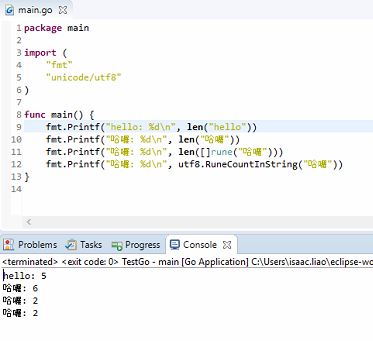
- Built-in function len returns the number of bytes, not runes in a string
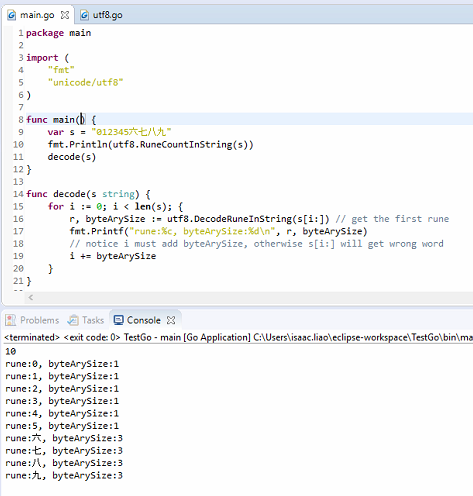
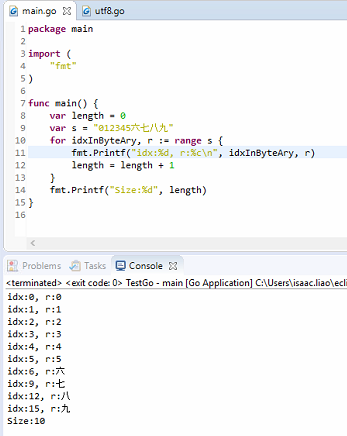
- Detect length of string
- Convert to []rune and use len()
- Use unicode/utf8
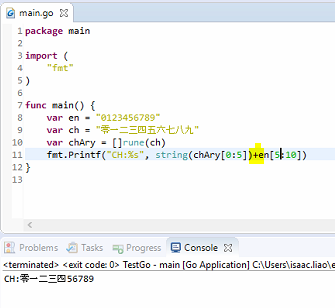
- substring, format: string[startIdx:endIdx], need to be reminded you need cast to rune if string contains
- Can use + to a append string.
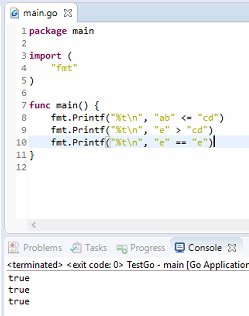
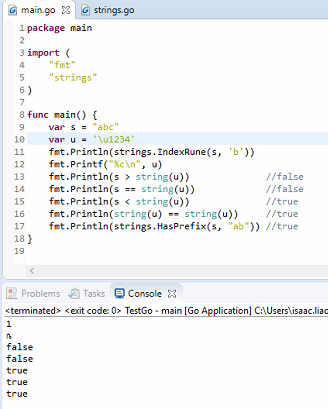
- Use == or > or < to compare string byte by byte (natural lexicographic ordering)
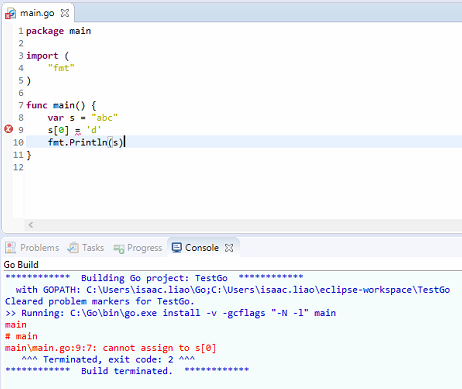
- string is immutable, so you CAN NOT assign value to a char of a string
- Natural data type to hold a single rune is int32
- UTF8
- UTF8 is a variable-length encoding of unicode code points as byte.
- High order bits of the first byte of the encoding for a rune indicate how many bytes follow.
- You can search for rune by searching for its bytes without worrying about the preceding context
- Lexicographic order equals to unicode point order. So sort UTF8 works naturally
- Go files always encoded in UTF8
- For special character. Use \uhhhh for 16 bits value. Usev\Uhhhhhhhh for 32 bits value
- Can use ==, <, > ...etc to compare string
- Count characters
- utf8.RuneCountInString and utf8.DecodeRuneInString
- Range byte array
What to read next
Previous / Next
More like this